

In today’s global economy, understanding currency exchange rates is essential for anyone involved in international trade or travel. The pound rate in Pakistani rupees is a crucial indicator for businesses and individuals alike, reflecting the value of the British pound against the local currency. This rate fluctuates based on various economic factors, including inflation, interest rates, and geopolitical events.
For those looking to exchange currency or invest in foreign assets, knowing the current pound rate can make a significant difference. It not only influences purchasing power but also impacts remittances and travel expenses. Keeping an eye on these rates helps individuals and businesses make informed financial decisions in an ever-changing market.
Understanding Pound Rate
The pound rate refers to the exchange value of the British pound (GBP) against the Pakistani rupee (PKR). This rate changes frequently, influenced by factors such as global market conditions, economic performance, and political stability. Tracking the pound rate is vital for individuals and businesses participating in international transactions.
Factors Influencing Pound Rate
- Economic Indicators: Economic growth, employment rates, and inflation impact the pound’s strength.
- Interest Rates: Central banks set interest rates affecting currency speculation and investment flows.
- Political Stability: Political events in the UK or Pakistan can lead to volatility in the pound rate.
- Market Sentiment: Investor perception and reactions can cause rapid fluctuations in currency values.
Importance of Monitoring Pound Rate
- Budgeting for Travel: For travelers, knowing the pound rate helps in budgeting expenses accurately.
- Remittances: Understanding the rate impacts the value of remittances sent from the UK to Pakistan.
- Trade Costs: Businesses need to account for the pound rate when pricing goods and services for export or import.
By keeping abreast of the current pound rate, individuals and businesses can make informed financial decisions that align with their economic interests and goals.
Factors Affecting Pound Rate in Pakistani Rupees
Several key factors influence the pound rate in Pakistani rupees. Understanding these factors helps individuals and businesses make informed financial decisions.
Economic Indicators
Economic indicators play a crucial role in determining the pound rate. Indicators such as GDP growth rate, employment statistics, and inflation rates directly impact currency value. For instance, a stronger UK economy, indicated by rising GDP, generally boosts the value of the British pound (GBP) against the Pakistani rupee (PKR). Conversely, high inflation in Pakistan can weaken the rupee, leading to an increased pound rate. Central banks also influence exchange rates through interest rate adjustments, where higher interest rates in the UK attract foreign investment, further enhancing the pound’s value.
Political Stability
Political stability significantly affects currency exchange rates. A stable political environment in the UK fosters confidence among investors, leading to a stronger pound. Political turmoil or uncertainty can lead to fluctuations in currency value. For example, events like Brexit created concerns affecting the GBP’s stability. Similarly, political developments in Pakistan can influence investor sentiment towards the rupee. If investors perceive a risk in Pakistan, they may favor holding GBP over PKR, resulting in a rise in the pound rate.
Current Pound Rate Trends
Monitoring the current trends in the pound rate against the Pakistani rupee provides valuable insights for individuals and businesses. This section covers historical data analysis and forecasts future trends.
Historical Data Analysis
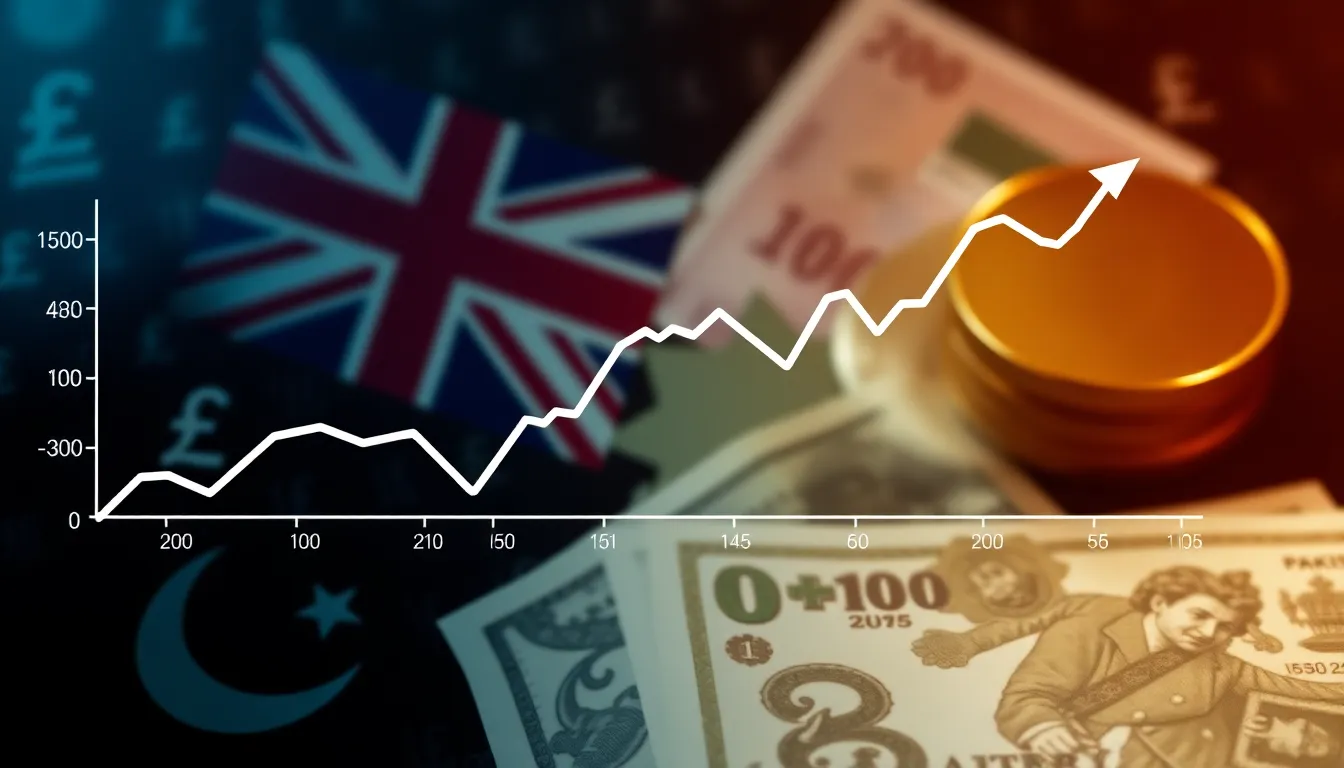
Historical data shows the pound rate’s fluctuations over time. For instance, in January 2022, the exchange rate was approximately 225 PKR for 1 GBP, reflecting a strong pound influenced by economic recovery post-COVID-19. By July 2023, the pound rate declined to around 215 PKR, impacted by rising inflation in the UK and economic pressures in Pakistan. Analyzing this data reveals periods of stability and volatility, driven by various economic events and political developments.
| Month/Year | Pound Rate (PKR) |
|---|---|
| Jan 2022 | 225 |
| Apr 2022 | 230 |
| Jul 2022 | 240 |
| Jan 2023 | 220 |
| Apr 2023 | 210 |
| Jul 2023 | 215 |
Forecasting Future Trends
Forecasting the pound’s future trends requires analyzing economic indicators and geopolitical events. Current predictions indicate slight volatility in the pound rate for the remainder of 2023. Economic recovery in the UK and potential interest rate hikes could strengthen the pound, potentially reaching values between 220-230 PKR. Conversely, any additional political instability in both nations may lead to decreased confidence, causing the rate to fluctuate below 215 PKR. Continuous monitoring of these factors is vital for accurate forecasting and informed financial decisions.
How to Monitor Pound Rate
Monitoring the pound rate in Pakistani rupees requires access to reliable tools and resources. These enable individuals and businesses to stay updated on fluctuations and relevant economic indicators.
Useful Tools and Resources
- Currency Converter Websites: Websites like XE.com and OANDA.com offer real-time exchange rates. Users can track live pound rates against the PKR, providing instantaneous updates crucial for financial decisions.
- Mobile Apps: Apps such as Currency Converter Plus and XE Currency allow users to monitor the pound rate on-the-go and set alerts for significant changes.
- Financial News Websites: Platforms like Bloomberg and Reuters cover economic news and analysis related to currency exchange. Regular visits to these sites can enhance understanding of factors influencing the pound rate.
- Central Bank Reports: The State Bank of Pakistan publishes reports on economic indicators and monetary policy. These reports provide insights into economic conditions affecting the currency market.
- Social Media and Forums: Following financial analysts and economists on platforms like Twitter, as well as engaging in financial forums, can yield valuable insights. Expert opinions and real-time updates shape awareness of market sentiment.
- Forex Trading Platforms: Services like MetaTrader offer in-depth tools and charts for real-time trading. Users can analyze market trends to predict potential fluctuations in the pound rate.
Utilizing these tools and resources enhances the ability to monitor changes in the pound rate, ensuring informed financial decisions.
Understanding the pound rate in Pakistani rupees is vital for anyone involved in international transactions or travel. It directly impacts financial decisions and overall economic planning. By keeping an eye on the factors that influence this rate, individuals and businesses can navigate currency fluctuations more effectively.
Utilizing reliable resources and tools to track the pound rate ensures that one stays informed about market trends. This knowledge empowers people to make strategic choices regarding budgeting, remittances, and trade pricing. Staying updated on economic indicators and political developments will help mitigate risks associated with currency volatility.


